
Stump Grinding vs Excavation in DFW: Protecting Shifting Underground Irrigation Lines
In North Texas clay soils, stump grinding is vastly superior to full excavation because it pulverizes the stump 8 to 12 inches below grade without disturbing surrounding soil, avoiding destruction of buried PVC irrigation lines, landscape lighting conduits, and foundation stabilization plumbing. Full mechanical excavation rips out massive root plates, causing widespread utility damage and leaving settling sinkholes.
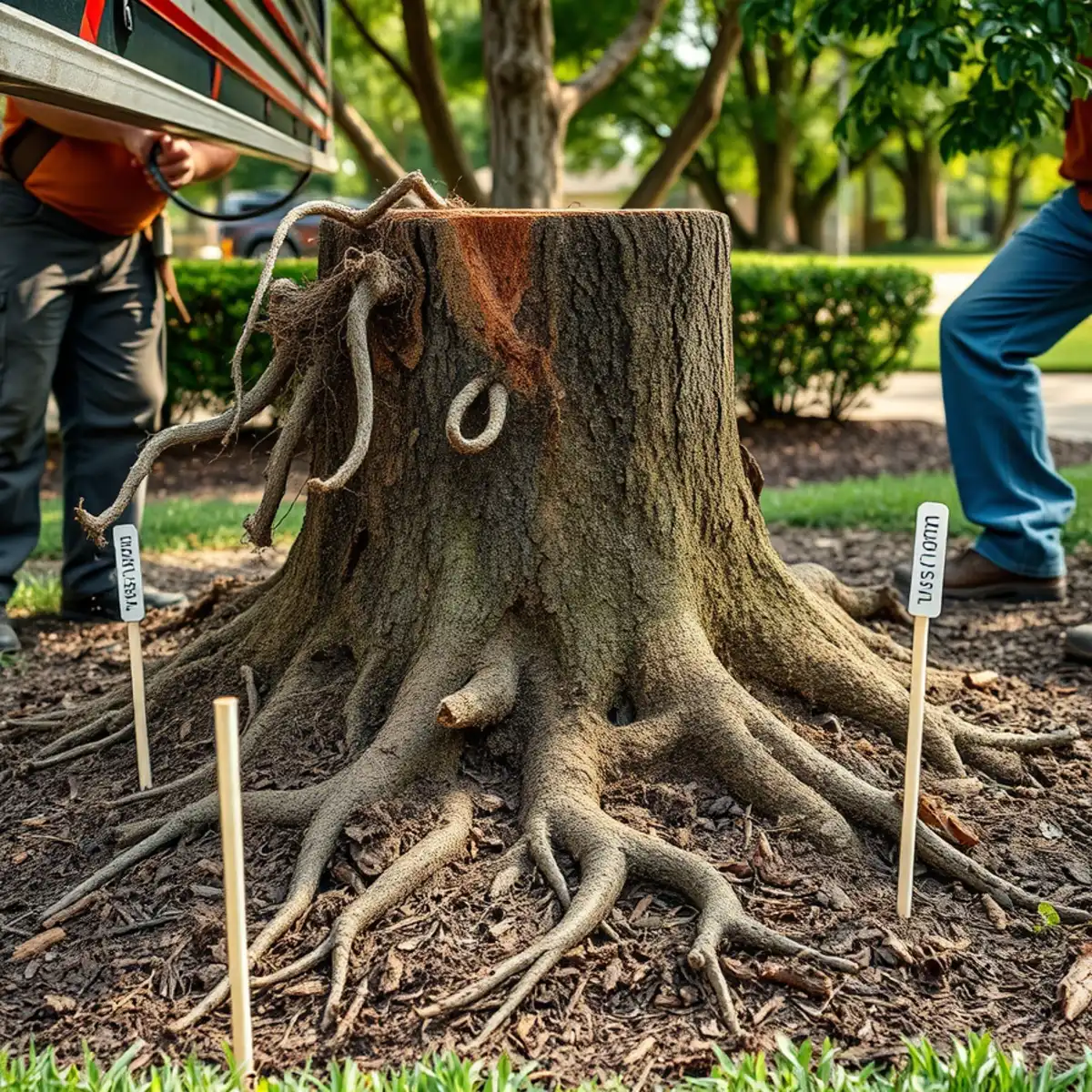
The Hidden Hazards of Mechanical Root Excavation in Blackland Clay
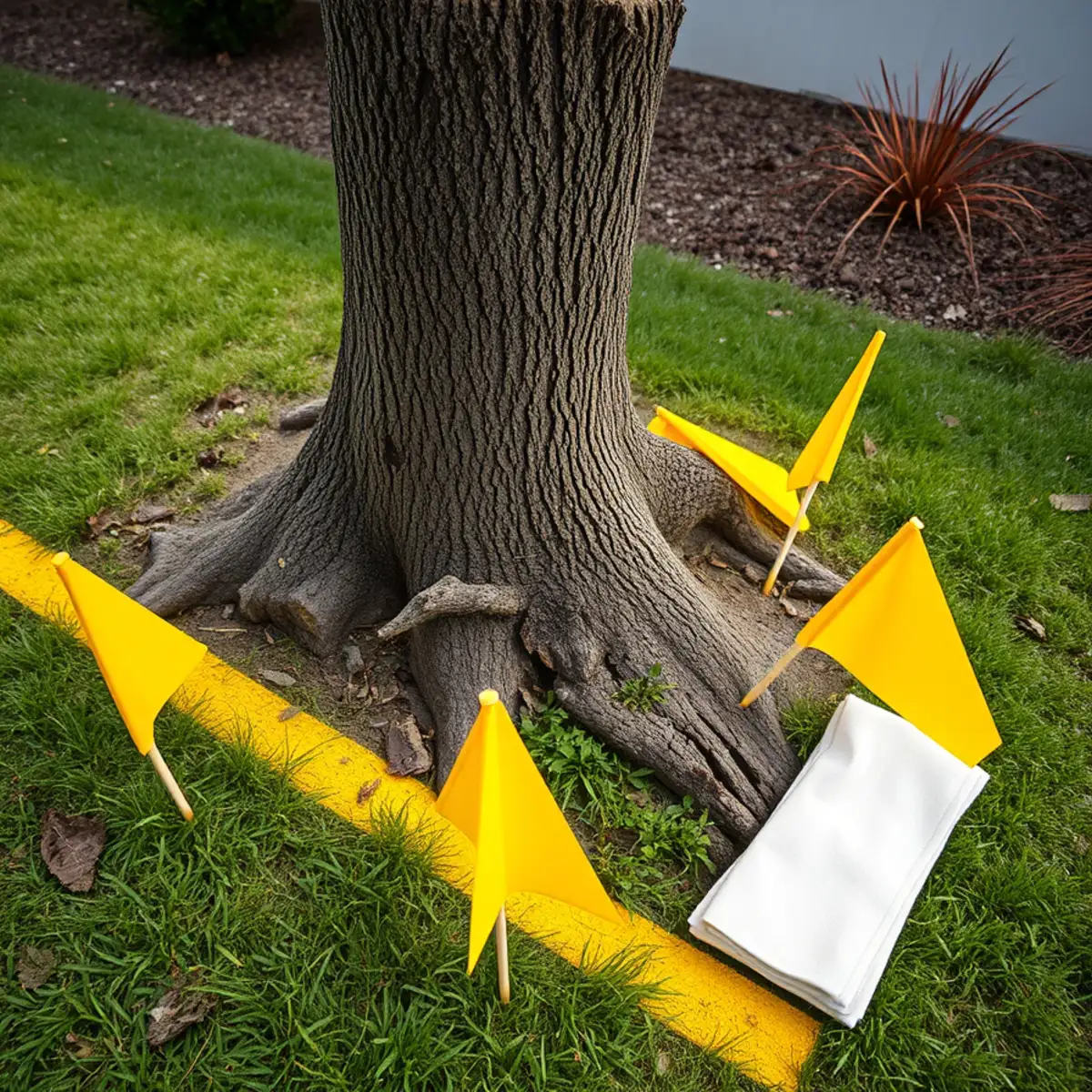
When an unwanted tree is felled on a North Texas property, homeowners face an essential decision: should they grind the remaining stump in place, or bring in an excavator or backhoe to rip the entire root ball out of the earth? In the heavy, expansive Houston Black clay typical of Denton, Collin, and Dallas counties, full excavation is almost always a costly mistake unless you are preparing ground for a poured concrete foundation or a swimming pool.
Mature shade trees send lateral root plates out 2 to 3 times the width of their canopy. In residential neighborhoods, these roots become hopelessly intertwined with PVC sprinkler pipes, drip irrigation zones, French drain conduits, low-voltage landscape lighting cables, and municipal water service lines. Ripping out a root plate with a 10-ton excavator yanks these underground utilities violently out of the ground, snapping connections dozens of feet away from the tree.
Furthermore, mechanical excavation removes cubic yards of soil, leaving a massive crater. Because imported backfill dirt rarely matches the density and compaction of surrounding virgin clay, the excavated hole settles unevenly for years, creating severe trip hazards, pooling rainwater, and foundation moisture disparities.
How Commercial Stump Grinding Preserves Subsurface Infrastructure
Commercial stump grinding uses a high-powered, multi-carbide cutting wheel rotating at thousands of RPM to shave the stump down into fine, organic wood mulch. Our operators systematically sweep the grinding wheel horizontally and vertically, shaving the stump down 8 to 12 inches beneath existing lawn grade.
Because the grinding wheel focuses exclusively on the central stump core and major surface root flares, the surrounding soil bed remains completely undisturbed. Irrigation lateral lines running just 18 inches away from the stump remain safely intact, and the yard retains its natural structural grading.
Over the following 3 to 5 years, the remaining subterranean root system naturally decomposes under the activity of beneficial soil microbes and fungi. As the deep roots break down into organic matter, they improve soil porosity and drainage without shifting your lawn or damaging underground plumbing.
Locating and Protecting Irrigation Laterals, Drip Zones, and Utilities
Before grinding begins on any North Texas residential property, professional preparation is critical. First, Texas 811 is notified to locate and mark all public underground utility easements—including buried electric, gas, fiber-optic telecom, and municipal water mains.
Next, our crew works with the homeowner to map private irrigation zones. Sprinkler lines and drip tubing are private infrastructure not marked by public utility locators. Our technicians inspect the proximity of nearby sprinkler heads, trace lateral pipe trajectories, and use gentle hand tools or pneumatic air-spades to expose shallow lines within 24 inches of the stump flare prior to spinning the cutting wheel.
If a shallow irrigation pipe passes directly underneath a surface root flare that must be removed for turf replanting, our team can carefully isolate the pipe, bridge the cut, or cap the line before grinding, ensuring no unexpected geysers erupt when the irrigation timer fires.
Backfilling, Debris Mulching, and Lawn Re-Turfing After Grinding
Stump grinding produces a substantial mound of rich organic wood chips mixed with aerated native clay. Homeowners have two options for managing this material: on-site utilization or complete haul-away.
Because fresh wood grindings make superb moisture-conserving mulch for shrub beds and garden paths, many North Texas homeowners retain the mulch on-site, saving hauling and disposal fees. However, if your goal is immediate re-sodding with Bermuda, St. Augustine, or Zoysia turf, the wood chips must be shoveled out of the hole. Leaving dense sawdust in the planting hole deprives new grass of nitrogen as soil bacteria consume nitrogen to break down carbon.
For lawn restoration projects, YardaBella removes the surplus mulch, fills the 10-inch depression with a screened topsoil-compost blend, tamps it firmly to prevent post-settling, and prepares a smooth, level seedbed ready for fresh turf sod.
| Factor | Commercial Stump Grinding | Full Excavator Root Pulling | Chemical Stump Rotting |
|---|---|---|---|
| Subsurface Soil Disruption | Minimal (isolated to 8–12 in. core) | Severe (massive crater & torn clay) | Zero mechanical disruption |
| Irrigation & Pipe Safety | High (controlled precision shaving) | Extremely poor (lines snapped & pulled) | High (no mechanical contact) |
| Time to Complete | 30 to 90 minutes per stump | 4 to 8 hours (heavy equipment) | 12 to 24 months of rotting |
| Lawn & Turf Impact | Clean mulch hole ready for topsoil | Heavy equipment tracks & deep hole | Stump remains an eye-sore for years |
| Cost Range | $150 to $450 per typical stump | $800 to $2,500+ (equipment + hauling) | $30 (chemicals) + years of waiting |
When removing massive post oak or cedar elm stumps located within 3 feet of gas meters or main electrical conduits, YardaBella deploys pneumatic supersonic air-knives (air-spades). Compressed air traveling at Mach 2 pulverizes compacted clay without nicking pipe coatings or severing wires.
Exposing sensitive underground utilities with zero risk of mechanical puncture before starting the heavy diesel stump grinder guarantees 100% property safety and eliminates costly emergency utility service calls.
Need Direct Local Assistance in Lewisville or DFW?
Our certified arborist crews provide on-site diagnostics, hazardous branch trimming, and emergency tree removal. Call our Lewisville dispatch desk 24 hours a day at (855) 615-0568.
Frequently Asked Questions
Will tree roots regrow after stump grinding in Texas?↓
How deep do you grind tree stumps in Lewisville and DFW?↓
Can you grind a stump if it is right next to a concrete driveway or sidewalk?↓
What should I do with the wood chips left after stump grinding?↓
Do you call Texas 811 before grinding stumps?↓
Related Services & Local Coverage
Explore our professional solutions and municipal dispatch zones connected to this guide: