
How Texas Blackland Prairie Clay Soils Cause Mature Trees to Uproot in Summer
Texas Blackland Prairie clay soils cause mature trees to uproot during summer because extreme heat shrinks the clay by up to 30%, opening deep ground fissures that rip feeder roots and detach the primary anchor plate. When sudden thunderstorm wind gusts strike a top-heavy canopy anchored in cracked, brittle soil, the entire root plate shears loose and topples without warning.
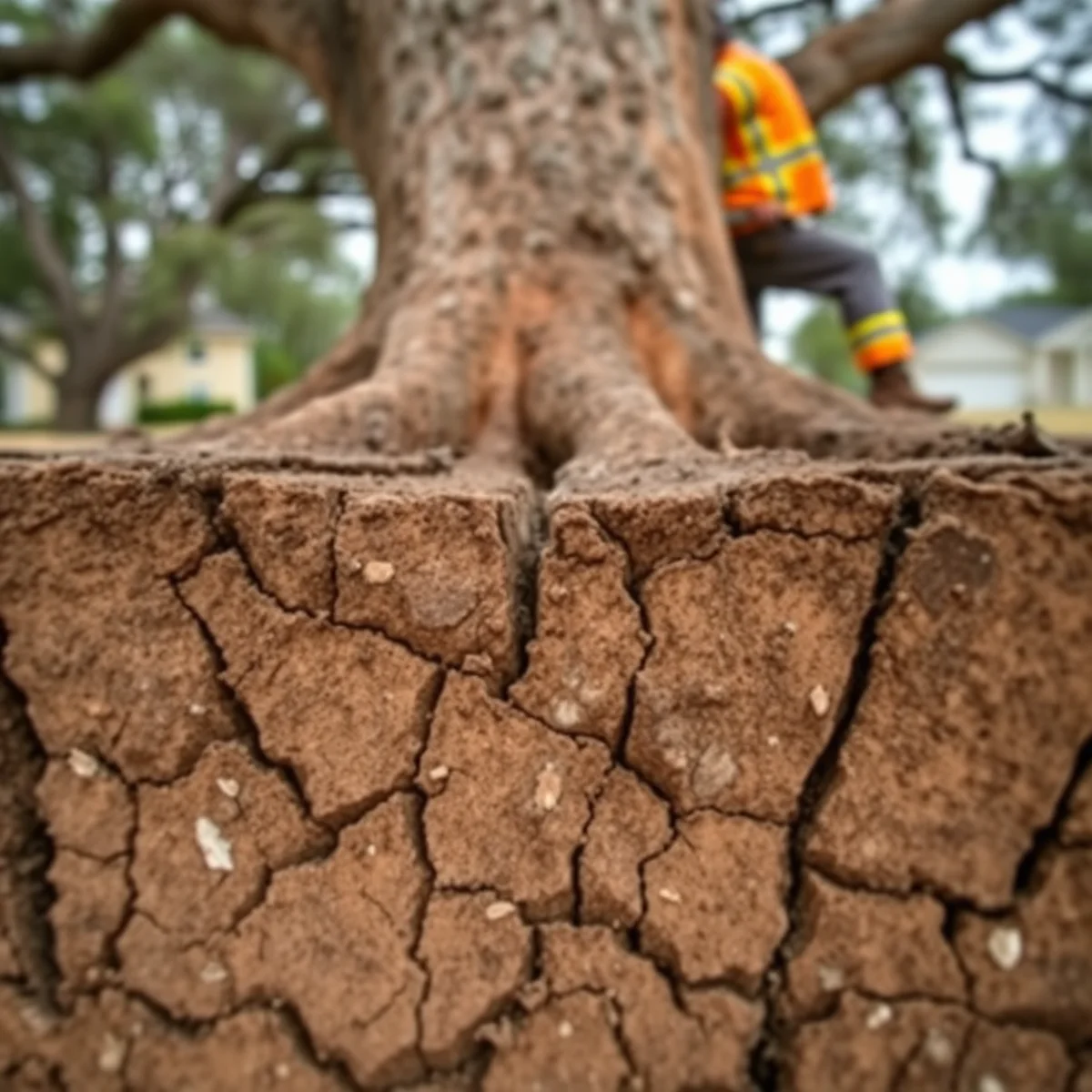
The Mechanics of Houston Black Gumbo Clay
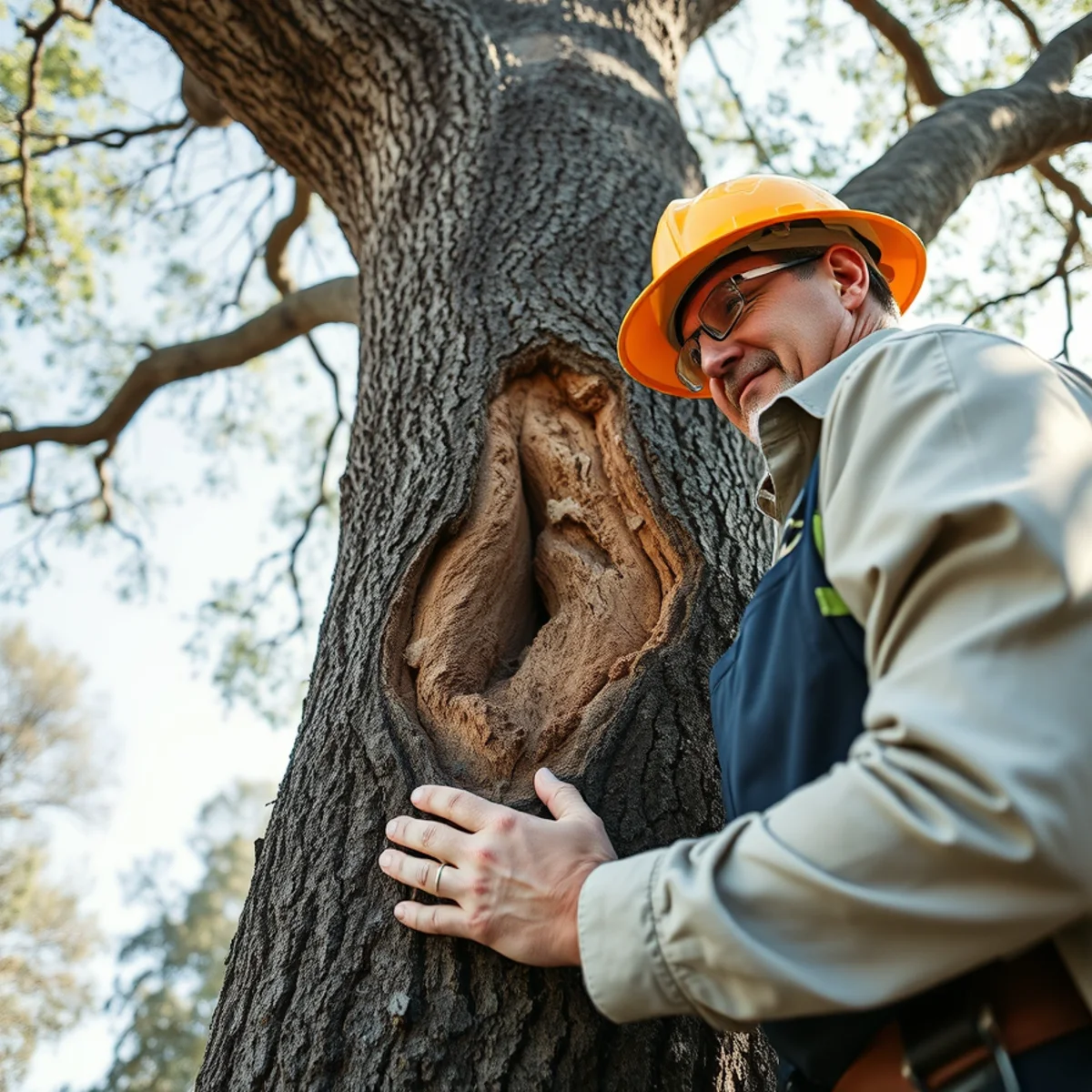
Denton, Dallas, and Collin counties sit squarely atop the Texas Blackland Prairie belt, characterized by Houston Black clay—famously known among locals as 'black gumbo'. This soil type has one of the highest shrink-swell capacities of any soil on Earth. During humid spring months, clay absorbs moisture and expands dramatically; under scorching triple-digit summer heat, it contracts, shrinking up to 30% in volume.
As the clay shrinks, massive subterranean fissures open up, frequently stretching 4 to 8 feet deep and several inches wide. These soil chasms literally tear apart fibrous feeder roots and destabilize the mechanical root plate anchoring mature shade trees.
Unlike loose loam or sandy soils where roots can penetrate deep taproots, Houston Black clay is so dense and oxygen-depleted beneath the top 18 inches that over 90% of a tree's root system is forced to grow horizontally in a wide, shallow pancake. When this shallow disk loses its soil grip, mechanical stability evaporates.
The Summer Uprooting Paradox: Why Dry Trees Fall
Most homeowners expect trees to blow over during violent spring tornadoes when the ground is soft and muddy. However, arborists see a massive spike in mature tree uprooting during late July and August. When a mature post oak or cedar elm loses its root anchorage due to clay shrinkage, the tree becomes top-heavy.
When a sudden convective summer thunderstorm rolls in, generating 50 to 60 mph gust fronts, the rigid, dehydrated root plate cannot flex with the wind. Instead of swaying, the entire root plate snaps loose, causing the tree to topple over with its entire root ball intact.
Furthermore, summer drought triggers 'sudden branch drop syndrome' in mature hardwoods. Dehydrated sapwood loses its natural elasticity. When sudden squall lines hit brittle limbs, massive multi-thousand-pound boughs snap simultaneously, unbalancing the canopy center of gravity and accelerating total trunk failure.
Early Warning Signs of Root Plate Destabilization
Detecting a shifting root plate before catastrophic failure requires close inspection of the ground around the tree's base: (1) Soil Heaving: Look for fresh mounding, cracking, or elevated soil ridges on the windward side of the trunk; (2) Root Shearing: Look for newly exposed or splintered lateral root flares; (3) Fresh Canopy Lean: Measure trunk verticality against a plumb line or neighboring structures; (4) Soil Gap Formation: Check if a distinct crescent-shaped air gap has formed between the soil and the leeward trunk base.
If you observe any of these warning signs, the tree has suffered mechanical failure at the foundation level. Immediate arborist assessment and potential emergency canopy weight reduction are necessary to prevent the tree from toppling onto your home.
Proactive Protection: Soaker Hose Irrigation and Deep Root Injections
To prevent summer root plate failure, property owners must maintain consistent soil moisture around tree root flares. Placing soaker hoses around the tree's drip line (not directly against the trunk) for 2 to 4 hours twice a week during severe drought prevents clay shrinkage.
Furthermore, professional deep root injections of mycorrhizal fungi and bio-stimulants break surface clay compaction, encouraging roots to seek deeper, more stable subterranean anchor layers.
Radial pneumatic trenching using arborist air-spades can loosen compacted soil around the root zone without damaging roots, backfilled with rich organic compost to moderate moisture fluctuations and buffer clay expansion.
| Soil State | Soil Physics & Moisture | Impact on Tree Roots | Failure Risk Level |
|---|---|---|---|
| Spring Saturation | Max clay expansion, muddy cohesion | Waterlogged feeder roots, reduced grip | Moderate (high wind blowdown) |
| Early Summer | Moisture decline, surface crusting | Active water uptake, normal transpiration | Low to Moderate |
| Late Summer Drought | 30% shrinkage, 6ft fissures form | Roots sheared, mechanical anchorage broken | CRITICAL (sudden root plate heave) |
| Irrigated Buffer | Stable moisture, minimal fissures | Feeder roots active, flexible anchor plate | Low (controlled tree stability) |
A dangerous mistake North Texas homeowners make during summer droughts is wrapping a garden hose directly around the base of the tree trunk. Mature shade trees absorb over 95% of their water through microscopic feeder roots located at and beyond the outer canopy drip line, not at the central trunk flare.
Dousing the trunk flare with continuous water creates a warm, soggy collar of damp bark that invites crown rot, Armillaria root rot, and wood-boring beetle infestations. Always set your soaker hoses or drip lines in concentric circles under the outer canopy edge where water actually reaches active absorbing roots.
Need Direct Local Assistance in Lewisville or DFW?
Our certified arborist crews provide on-site diagnostics, hazardous branch trimming, and emergency tree removal. Call our Lewisville dispatch desk 24 hours a day at (855) 615-0568.
Frequently Asked Questions
What are the warning signs that a tree root plate is shifting?↓
Should I water my tree trunk directly during a drought in Texas?↓
How much water does a mature Texas shade tree need in August?↓
Can a leaning tree with a heaved root plate be straightened?↓
How does deep root fertilization help trees survive clay soil droughts?↓
Related Services & Local Coverage
Explore our professional solutions and municipal dispatch zones connected to this guide: