
Spring Pre-Tornado Tree Safety Audit: 5 Critical Failure Points in North Texas Yards
A spring pre-tornado tree safety audit identifies hidden structural weaknesses before peak North Texas severe weather in April and May. Certified arborists inspect five critical failure zones: co-dominant trunk splits with included bark, root flare fungal decay, soil heaving on windward root plates, heavy deadwood over structures, and excessive wind-sail canopy density.

Why April and May Severe Weather Punishes Neglected DFW Shade Trees
Springtime in North Texas brings spectacular green foliage, but it also ushers in Tornado Alley's most violent weather patterns. Between late March and early June, supercell thunderstorms generate straight-line winds exceeding 70 to 80 mph, microbursts, golf-ball-sized hail, and tornadoes across Denton, Collin, and Dallas counties.
During winter dormancy, bare deciduous trees offer minimal resistance to wind. However, by mid-April, shade trees are completely covered in dense new foliage. A fully leafed-out mature oak or elm functions like a gigantic ship's sail.
When gale-force storm winds hit this dense canopy sail, millions of foot-pounds of dynamic kinetic energy transfer down through the branches and trunk into the underground root plate. Any concealed structural defect or root rot will fail catastrophically under these loads.
The 5 Structural Failure Points: A Systematic Visual Inspection Guide
Property owners should conduct a thorough visual tree audit every February or March before severe storm season arrives. Arborists focus on five primary points of structural vulnerability:
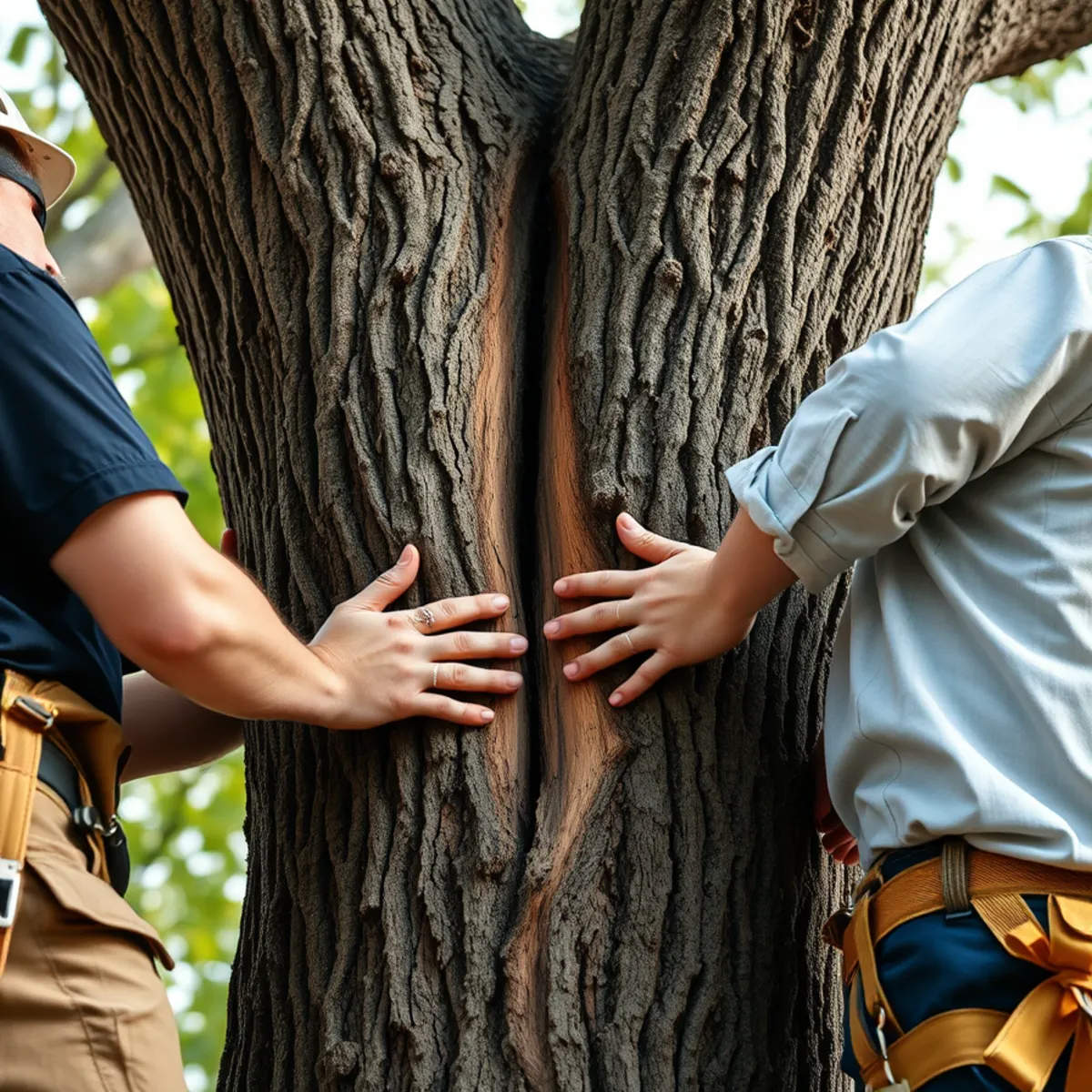
1. Co-Dominant Trunks with Included Bark: When two or more main trunks grow upright in a tight V-shape, expanding bark is trapped between them, preventing solid wood connection and creating a severe cleavage split risk.
2. Root Flare Fungal Conks and Cavities: Shelf mushrooms, conks (such as Ganoderma), or carpenter ant activity at the base of the trunk signal advanced internal heartwood or root rot.
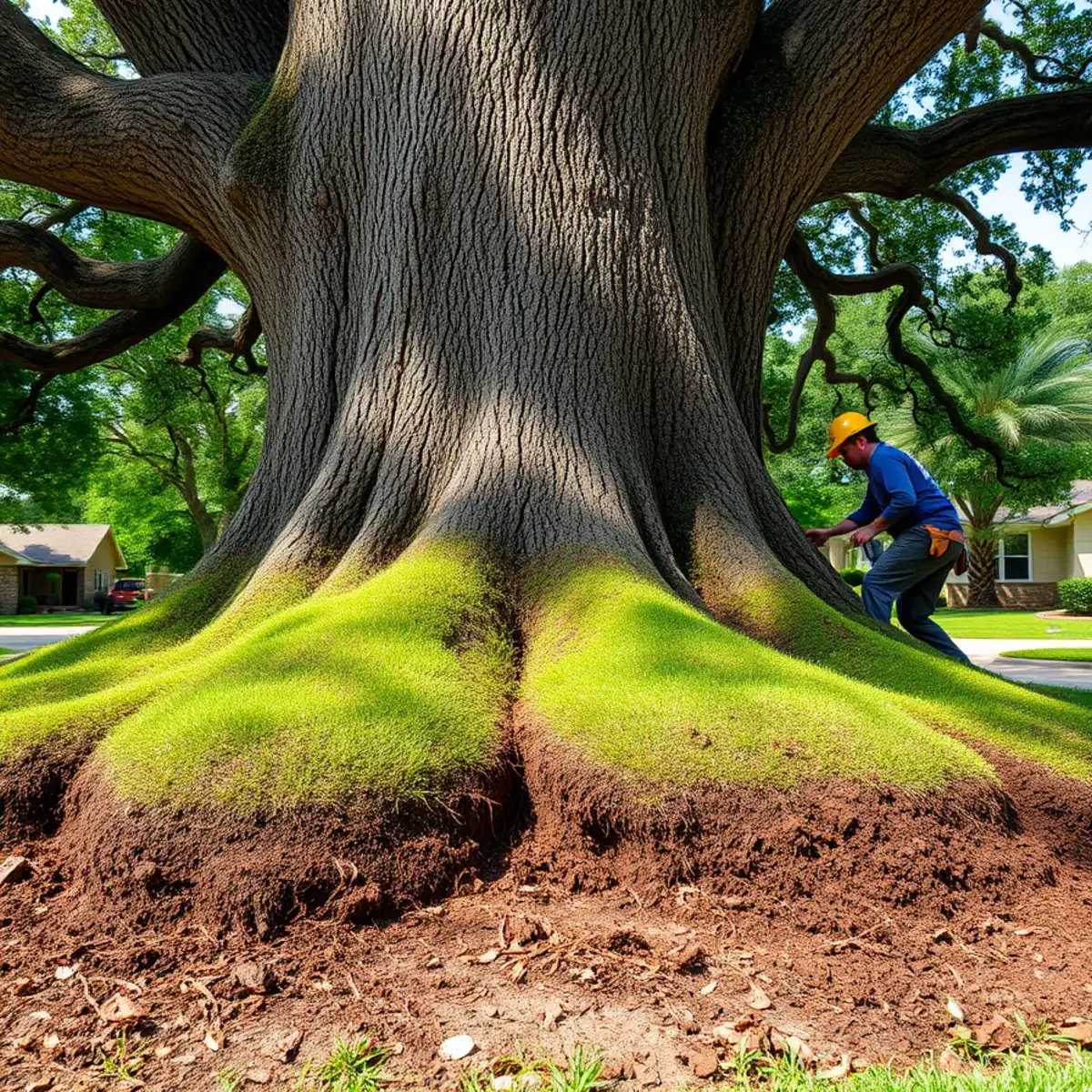
3. Ground Mounding and Soil Cracking: Fresh crescents of lifted turf or cracked soil on the windward side of a leaning tree indicate that anchor roots have snapped and the root plate is actively failing.
4. Heavy Overhead Deadwood: Any limb over 2 inches in diameter that fails to leaf out in spring is brittle deadwood that will snap and plummet in high winds.
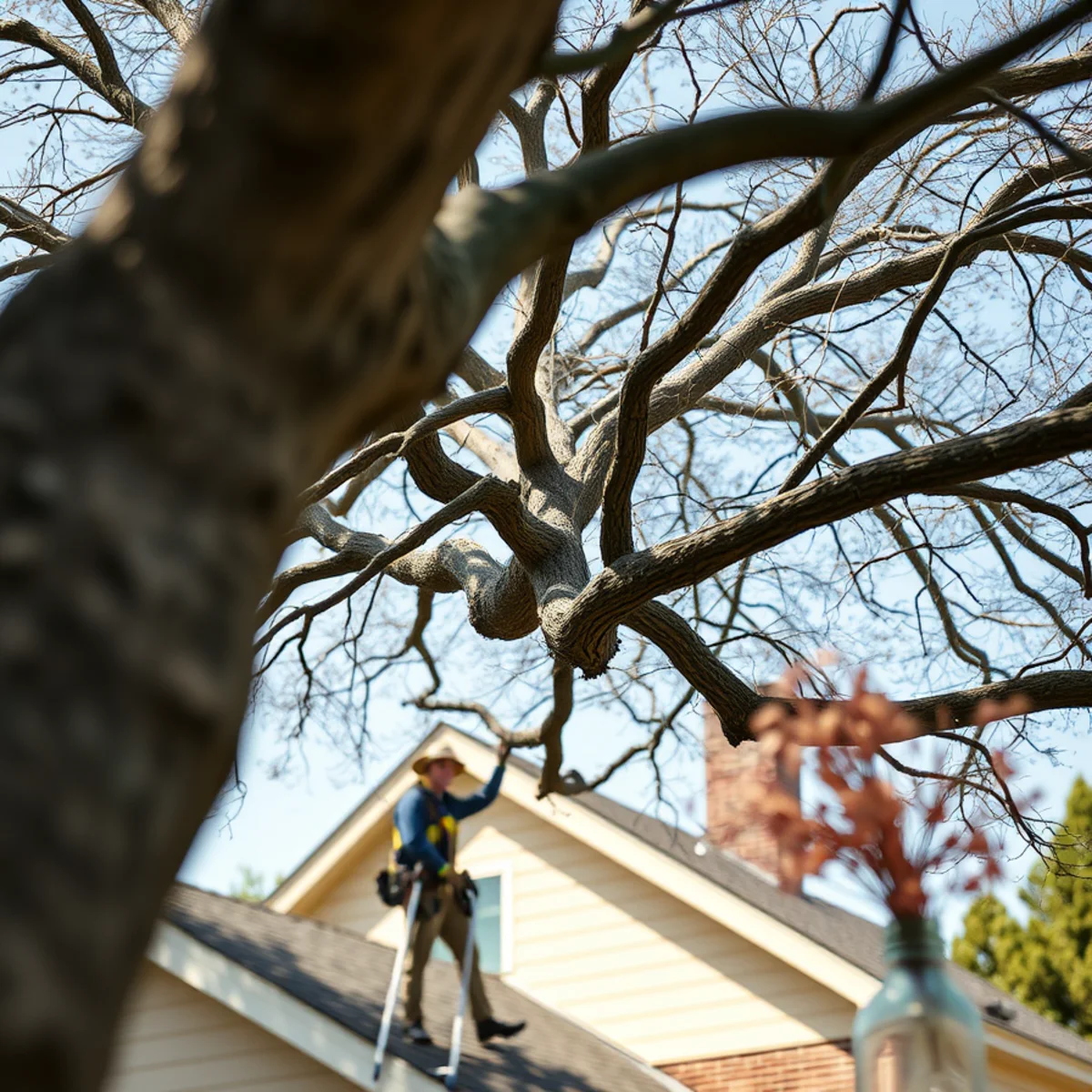
5. Unbalanced Canopy Weight and Roof Encroachment: Trees that lean heavily toward rooflines or driveways carry dangerous gravitational momentum when buffeted by storm winds.
Root Flare Forensics: Detecting Underground Cavities and Ganoderma Fungi
The most deceptive hazard trees in North Texas are those with vibrant, lush green canopies that are completely hollowed out at ground level. Fungal pathogens like Ganoderma lucidum enter trees through lawnmower wounds or buried root flares.
These wood-decay fungi feast on lignin and cellulose inside structural anchor roots and the lower trunk heartwood. Because the outer sapwood (xylem) remains intact, the tree continues pumping water and nutrients to the leaves, masking the internal danger.
During an arborist safety audit, certified technicians expose buried root flares with pneumatic air-spades, sound the trunk with non-destructive acoustic hammers, and use micro-resistance drills to measure sound wood shell thickness, catching hidden hazards before storms strike.
Aerodynamic Crown Thinning: Reducing Sail Resistance Without Topping

When a shade tree is structurally sound but has an excessively dense canopy, the most effective preventative measure is aerodynamic crown thinning. Homeowners must never 'top' a tree—a barbaric practice that creates decaying stubs and weak, hazardous water sprouts.
Professional crown thinning selectively removes 10% to 15% of interior crossing branches, epicormic shoots, and end-heavy twigs. This creates clean, uniform air channels throughout the entire canopy structure.
During a severe 70 mph thunderstorm, wind blows freely through an aerodynamically thinned canopy instead of meeting solid resistance. This dampens trunk oscillation, lowers torque on branch crotches by up to 40%, and prevents whole-tree uprooting.
| Failure Point | Visible Warning Signs | High-Wind Risk Level | Inspection Tool | Mitigation Strategy |
|---|---|---|---|---|
| Co-Dominant V-Crotch | Tight V-junction; vertical sap bleed or seam | Extreme (cleaves in 50+ mph wind) | Visual inspection & sounding mallet | Dynamic synthetic cabling & reduction |
| Root Flare Decay | Ganoderma conks, sawdust, hollow sound | Critical (whole tree uproots suddenly) | Resistograph micro-drill / air-spade | Hazardous tree felling & crane extraction |
| Windward Soil Heaving | Lifted turf mound; fresh ground fissures | Immediate Failure Imminent | Soil probe & level audit | Emergency removal prior to next storm |
| Large Deadwood Limbs | Bare branches with peeling bark above house | High (projectile limb drop) | Binocular canopy scan | Aerial bucket / climbing deadwooding |
| Over-Dense Canopy Sail | Solid wall of foliage; heavy branch whip | Moderate (transfers torque to roots) | Aerodynamic canopy evaluation | ANSI A300 selective crown thinning |
During a spring audit, our certified tree risk assessors tap the trunk base and main scaffold unions with an arborist sounding mallet. Healthy, solid hardwood produces a crisp, high-pitched acoustic resonance.
A dull, hollow thud indicates internal decay, heart rot cavities, or active insect hollows. When anomalous acoustic readings occur, we deploy micro-resistance drill instrumentation to chart the exact percentage of remaining sound wood wall without harming tree health.
Need Direct Local Assistance in Lewisville or DFW?
Our certified arborist crews provide on-site diagnostics, hazardous branch trimming, and emergency tree removal. Call our Lewisville dispatch desk 24 hours a day at (855) 615-0568.
Frequently Asked Questions
When should I schedule a spring tree safety audit in North Texas?↓
What is a co-dominant trunk and why is it dangerous in a storm?↓
Can a tree look healthy on the outside and still fall in a storm?↓
What does fungal growth at the base of a tree mean?↓
Does tree topping protect my tree from storm winds?↓
Related Services & Local Coverage
Explore our professional solutions and municipal dispatch zones connected to this guide: