
Fall Tree Maintenance in Texas: Pruning, Mulching, and Winterizing Your Canopy
Fall tree maintenance in Texas focuses on preparing hardwoods for winter dormancy by replenishing organic mulch rings, applying deep root biostimulants to expand root reserves, removing deadwood before winter ice storms, and establishing slow-soak watering routines that insulate root flares against sudden hard freezes.
Why Autumn Is the Critical Window for North Texas Tree Health

As October and November bring relief from the scorching Texas summer sun, many homeowners assume their yard care responsibilities are over until spring. In reality, autumn is the single most vital physiological window for establishing long-term tree resilience across Dallas-Fort Worth.
While deciduous leaves change color and drop, signaling that above-ground canopy photosynthesis is winding down, subterranean root systems enter their most vigorous period of root elongation. Soil temperatures remain warm long after air temperatures dip, giving trees the opportunity to absorb moisture and store energy.
Taking proactive arborist steps during autumn fortifies mature hardwoods against severe winter freezes, optimizes spring bud break, and eliminates weak deadwood limbs that snap under glaze ice loads.
The Science of Fall Mulching: Insulating Roots and Avoiding 'Mulch Volcanoes'
Applying fresh mulch in autumn is essential for regulating soil temperatures and conserving moisture in dry North Texas winters. However, improper mulching is one of the leading causes of premature shade tree decline.
Homeowners and uncertified landscapers often pile mulch 6 to 10 inches deep directly against tree trunks—creating a lethal 'mulch volcano'. Trapping moist mulch against trunk bark suffocates the root flare, prevents gas exchange, and introduces crown rot fungi and boring insects into the lower trunk cambium.
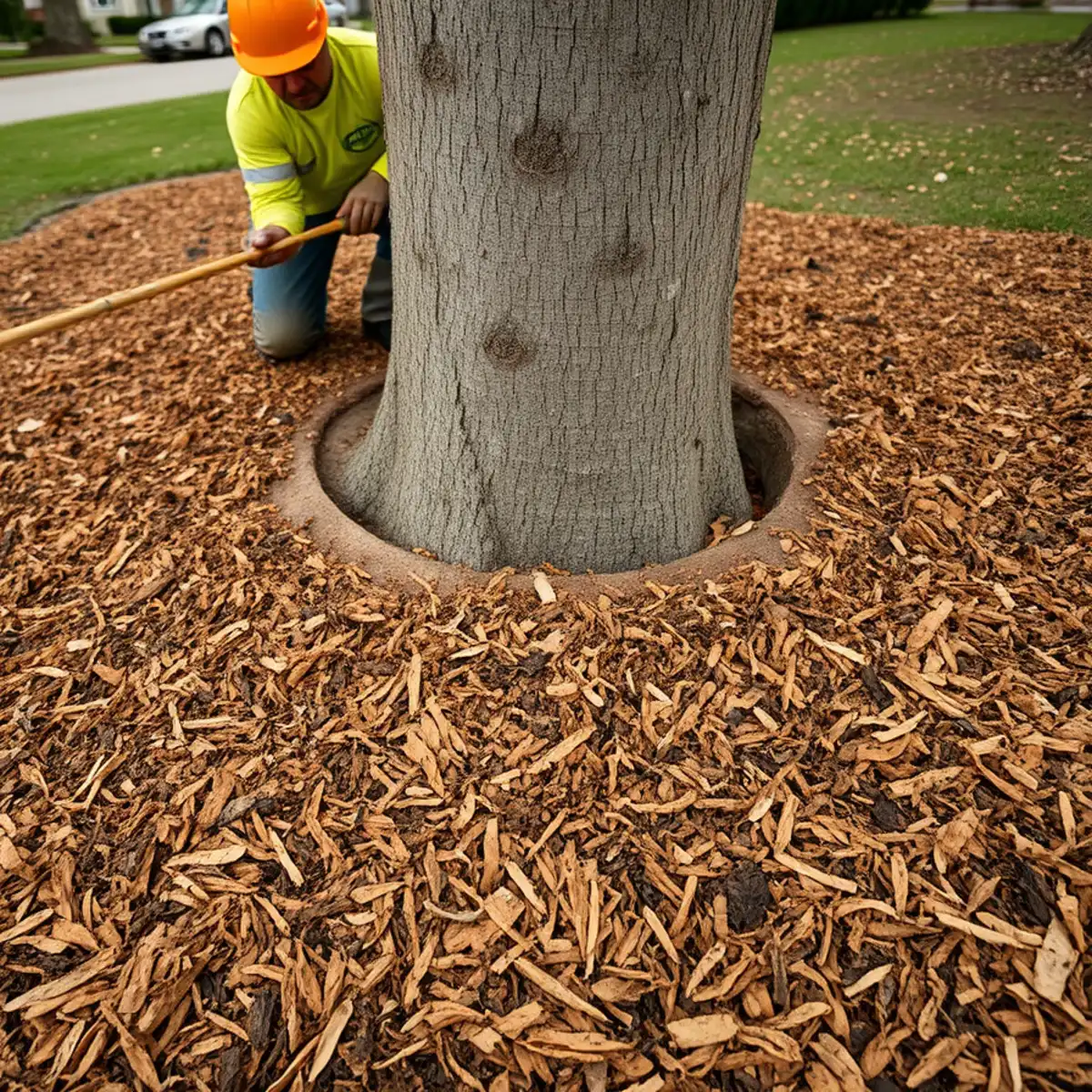
The certified arborist standard is the 'donut method': apply 2 to 3 inches of coarse, double-shredded native hardwood mulch in a wide 4 to 6-foot circle, keeping the mulch pulled back at least 3 to 4 inches away from the trunk flare. This creates an insulating thermal blanket over feeder roots while allowing the root flare to breathe.
Autumn Deep Root Feeding: Building Carbohydrate Reserves for Spring Flush
During the summer, mature oaks, elms, and pecans expend massive energy reserves transpiring water and repairing heat-damaged cellular tissue. If entering winter in a depleted metabolic state, trees become vulnerable to freeze shock and opportunistic spring pests like borers and aphids.
Autumn deep root fertilization provides the exact nutritional profile needed for winter hardening. Rather than applying high-nitrogen fertilizers (which would stimulate fragile new leafy shoots that freeze at 32°F), autumn formulations emphasize slow-release phosphorus, potassium, humic acids, and mycorrhizal fungi.
Injected 6 to 8 inches into the soil profile under 150 PSI, this organic biostimulant slurry encourages expansive root branching and replenishes the tree's vascular starches, fueling an explosive, disease-resistant canopy flush when March arrives.
Dormant Season Deadwood Pruning: Preempting Winter Ice Snaps
Late autumn through mid-winter is the premier season for structural tree pruning in North Texas. With leaves fallen from deciduous trees, certified arborists have an unobstructed view of the tree's skeletal branch architecture, making it easy to identify crossing limbs, tight V-crotches, and internal decay pockets.
Removing deadwood limbs before winter storms hit is critical. In an ice storm, deadwood absorbs moisture, freezes, and snaps under minimal ice accumulation, falling onto roofs, parked cars, or power drops.
Furthermore, pruning oaks during the dormant winter months (November through January) completely eliminates the risk of transmitting oak wilt, as nitidulid sap beetles are completely inactive during freezing winter conditions.
| Autumn Task | Primary Tree Benefit | Clay Soil Interaction | Common DIY Error | Recommended Frequency |
|---|---|---|---|---|
| Organic Donut Mulching | Insulates feeder roots from freeze cycles | Retains deep moisture; stops clay cracking | Piling mulch against trunk (mulch volcano) | Every autumn (2–3 in. layer) |
| Subsurface Deep Root Injections | Builds root carbohydrate & mineral reserves | Fractures compacted summer clay beds | Using high-nitrogen turf fertilizer | Once annually in October/November |
| Dormant Deadwood Sanitation | Prevents ice storm snapping & roof impacts | Clear view of branching architecture | Flush cutting or leaving rotting stubs | Every 2 to 3 years |
| Slow-Soak Winter Hydration | Insulates moist soil (wet clay holds heat) | Prevents root desiccation in dry winters | Stopping all watering in October | Monthly slow-soak during dry spells |
| Root Flare De-Compaction | Restores oxygen exchange to trunk base | Removes clay piled by lawn edgers | Burying root flares under landscape stone | Once during initial property audit |
Before adding fresh autumn mulch, YardaBella technicians inspect the root flare. Years of lawn mowing and sediment runoff often bury root flares under 3 to 6 inches of compacted clay.
We utilize supersonic compressed air tools to gently blow away excess clay, exposing the natural root collar flare. Only after the flare is exposed to fresh air do we lay the mulch ring, ensuring root cells receive maximum oxygen while retaining winter moisture.
Need Direct Local Assistance in Lewisville or DFW?
Our certified arborist crews provide on-site diagnostics, hazardous branch trimming, and emergency tree removal. Call our Lewisville dispatch desk 24 hours a day at (855) 615-0568.
Frequently Asked Questions
Is fall a good time to trim trees in North Texas?↓
Should I water my trees during the winter in DFW?↓
What is a 'mulch volcano' and why is it dangerous?↓
How thick should tree mulch be in Texas?↓
Can I fertilize my trees in the fall?↓
Related Services & Local Coverage
Explore our professional solutions and municipal dispatch zones connected to this guide: