
Cabling and Bracing Multi-Trunk Cedar Elms: Preventing Catastrophic Trunk Splitting
Cabling and bracing multi-trunk cedar elms preserves mature trees by installing dynamic synthetic cables (such as Cobra systems) in the upper two-thirds of the canopy and high-strength threaded steel rods through co-dominant trunk crotches. This provides supplemental structural support that prevents catastrophic trunk cleavage during high-wind storms and freezing rain.
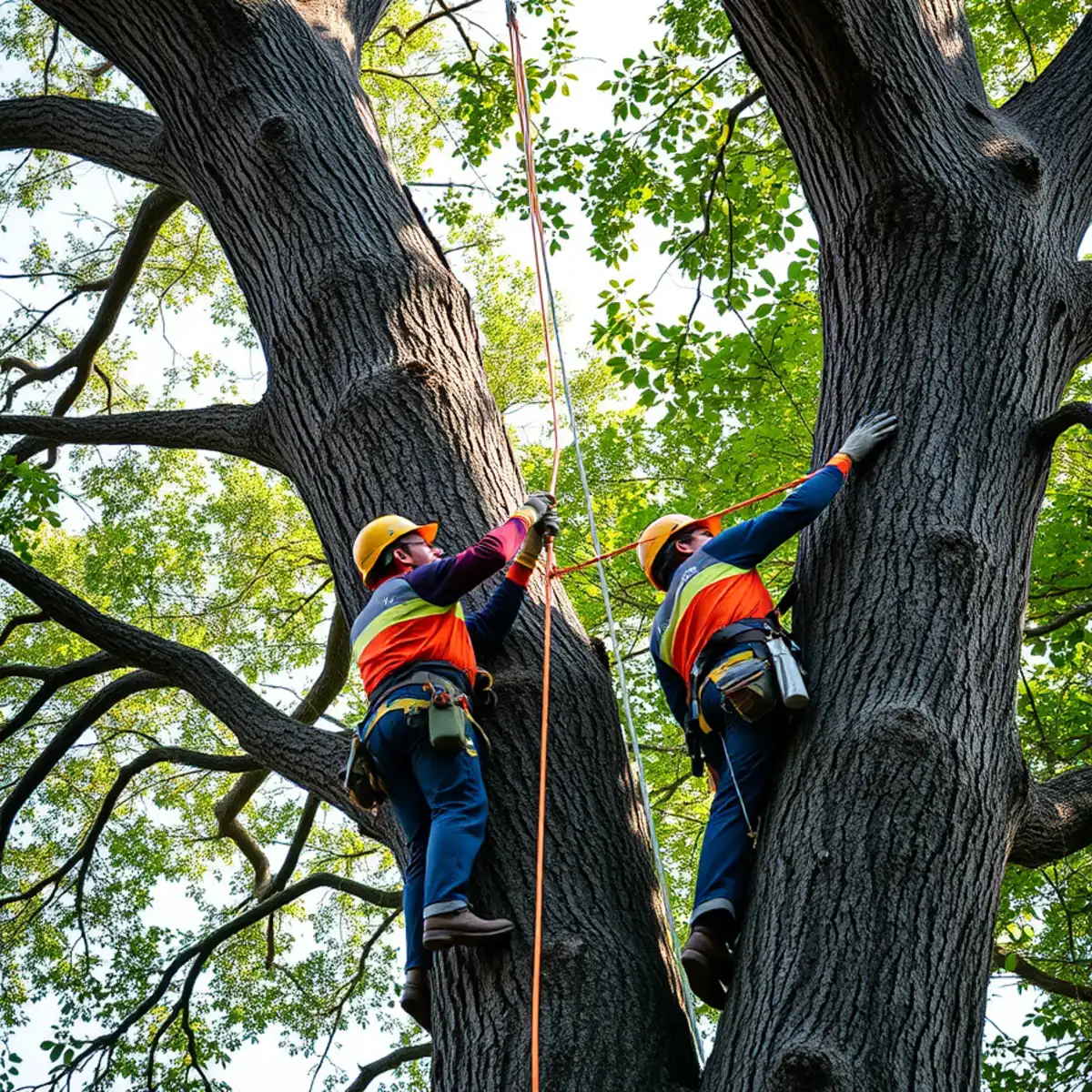
Understanding Co-Dominant Trunks and Structural Cleavage in Cedar Elms
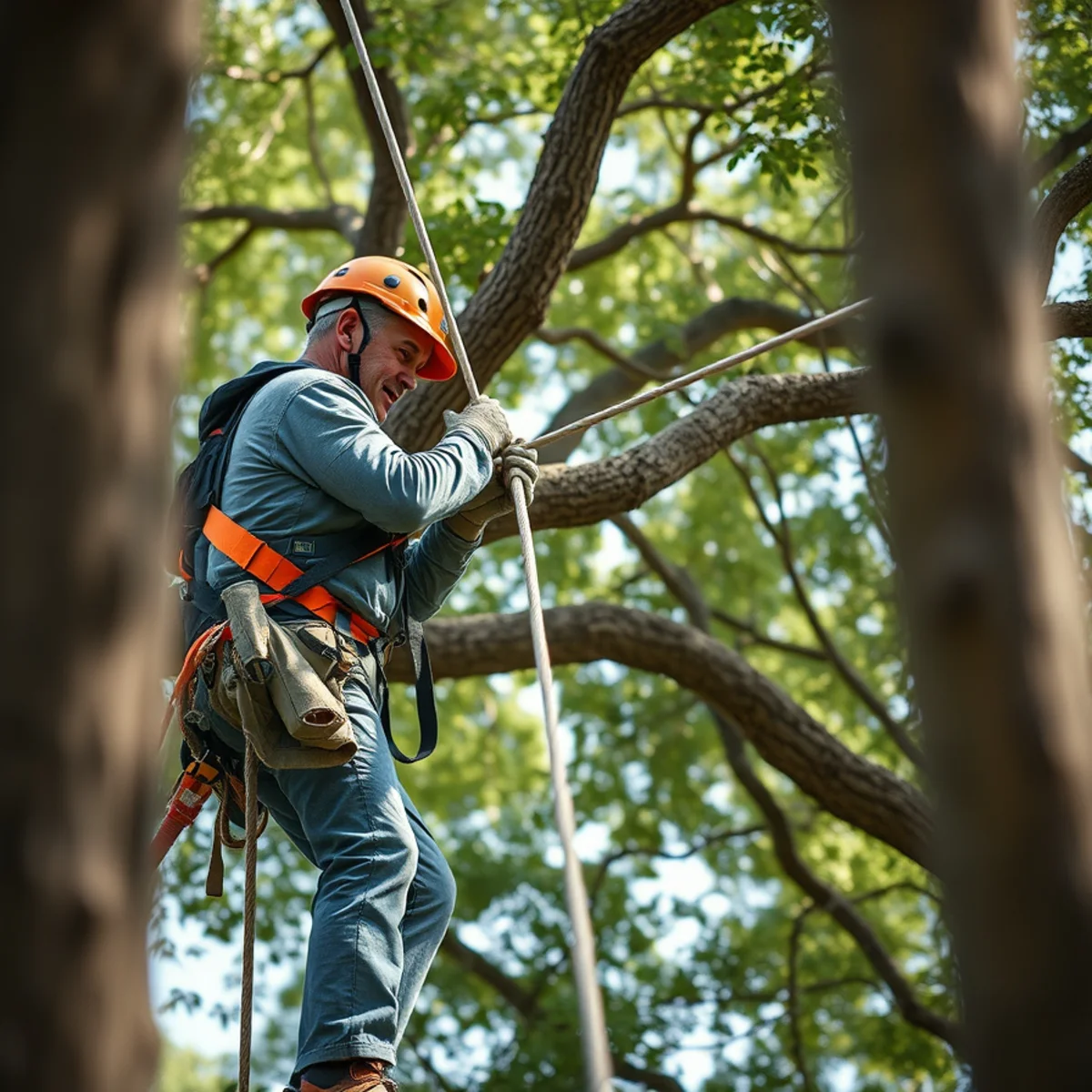
Cedar elms (Ulmus crassifolia) are magnificent, drought-hardy shade trees native to the limestone hills and river bottoms of North Texas. However, mature cedar elms frequently develop co-dominant trunks—where two or three massive central stems grow alongside each other at narrow, upright V-shaped angles.
As these competing trunks expand in girth, their bark is pressed together in the crotch, creating 'included bark'. Because tree bark does not contain structural wood fibers, there is zero interlocking strength holding the trunks together. The trunks are essentially leaning against each other like giant levers.
During severe spring windstorms or heavy winter glaze ice accumulation, unequal mechanical force pushes the stems apart, creating extreme cleavage tension. Without supplemental structural support, the trunk splits down the middle, destroying half or all of the tree.
Dynamic Synthetic Cabling vs. Rigid Steel Guy-Wire Systems
For decades, the standard method of tree support involved drilling through trunks and installing rigid extra-high-strength (EHS) steel cables. While steel cables prevent movement, they also restrict the tree's natural trunk sway. Trees rely on wind movement to stimulate thigmomorphogenesis—the physiological production of reaction wood that naturally strengthens limbs.
Today, certified arborists utilize dynamic synthetic cabling systems (such as the Cobra cable system). Dynamic cables are constructed from hollow-braid, high-tenacity polypropylene rope with shock absorbers and expansion inserts.
Dynamic systems allow multi-trunk elms to move and sway naturally in moderate breezes, continuing to build natural supporting wood. Only when violent 50+ mph wind gusts or heavy ice loads deflect the trunks beyond their elastic threshold does the dynamic cable catch the load, preventing trunk cleavage without strangling the stems.
Through-Rod Trunk Bracing: Stabilizing Active Crotch Cracks and Included Bark
When a multi-trunk cedar elm has already developed a visible hairline crack or severe included bark at its primary crotch, cabling alone is insufficient. Upper cables reduce sway leverage, but the lower split requires rigid mechanical stabilization.
In these situations, arborists install high-strength threaded steel bracing rods directly through the junction. Technicians drill precision holes through the overlapping trunks and insert heavy galvanized or stainless steel threaded rods secured with heavy-duty washers and nuts countersunk into the wood.
The bracing rods pin the split trunks together rigidly, preventing rotational torsion and allowing the tree's living vascular cambium to grow over the hardware, compartmentalizing the wound into solid structural wood.
ANSI A300 Installation Standards and Annual Inspection Protocols
Cabling and bracing a mature shade tree is complex engineering that must comply strictly with ANSI A300 (Part 3) Supplemental Support Systems standards. An incorrectly positioned cable can exert downward crushing force, snapping limbs rather than protecting them.
Per industry standards, cables must be installed at a height approximately two-thirds of the distance from the crotch to the branch tips. Installing cables too low creates excessive bending leverage; installing them too high fails to distribute heavy trunk loads.
Furthermore, supplemental support systems require annual visual inspections. Certified arborists inspect cable tension, check shock absorbers for UV degradation, and verify that expanding limb girth has not outgrown dynamic expansion loops.
| Support System | Mechanical Motion | Trunk Invasiveness | Ice & Storm Protection | Inspection Lifecycle |
|---|---|---|---|---|
| Dynamic Synthetic Cabling (Cobra) | Permits natural sway; dampens shock | Non-invasive (loop slings; no drilling) | Superior shock absorption in gusts | Inspect every 2 to 3 years |
| Rigid EHS Steel Cable | Zero sway (completely static) | Invasive (eyebolts drilled through wood) | High static strength; weak shock flex | Inspect every 1 to 2 years |
| Threaded Steel Bracing Rods | Rigid cross-pinning of lower crotch | Invasive (drilled through split wood) | Essential for active crotch fissures | Permanent; monitor wood callus |
| Crown Reduction Only (No Cable) | Full natural sway | Non-invasive (pruning cuts only) | Reduces sail but leaves weak crotch | Prune every 2 years |
The most frequent failure in amateur tree cabling is incorrect elevation placement. Placing a cable in the lower half of the canopy acts as a rigid fulcrum—under violent 60 mph winds, the trunk snaps right above the cable attachment point.
YardaBella climbers measure branch geometry with aerial clinometers, securing dynamic cable bridles precisely between 65% and 70% of the total canopy height. This mathematical sweet spot maximizes dampening leverage while preserving upper canopy flex.
Need Direct Local Assistance in Lewisville or DFW?
Our certified arborist crews provide on-site diagnostics, hazardous branch trimming, and emergency tree removal. Call our Lewisville dispatch desk 24 hours a day at (855) 615-0568.
Frequently Asked Questions
Does tree cabling hurt the tree?↓
How do I know if my cedar elm needs cabling?↓
How long does a tree cabling system last in Texas?↓
Can cabling fix a tree trunk that has already split?↓
How much does it cost to cable and brace a multi-trunk tree?↓
Related Services & Local Coverage
Explore our professional solutions and municipal dispatch zones connected to this guide: